


Stocks jump on hopes for de-escalation in Iran. RBA minutes show four dissenters weren’t against hiking, just the timing; And New Zealand business confidence slumps in March as fuel prices jumped.
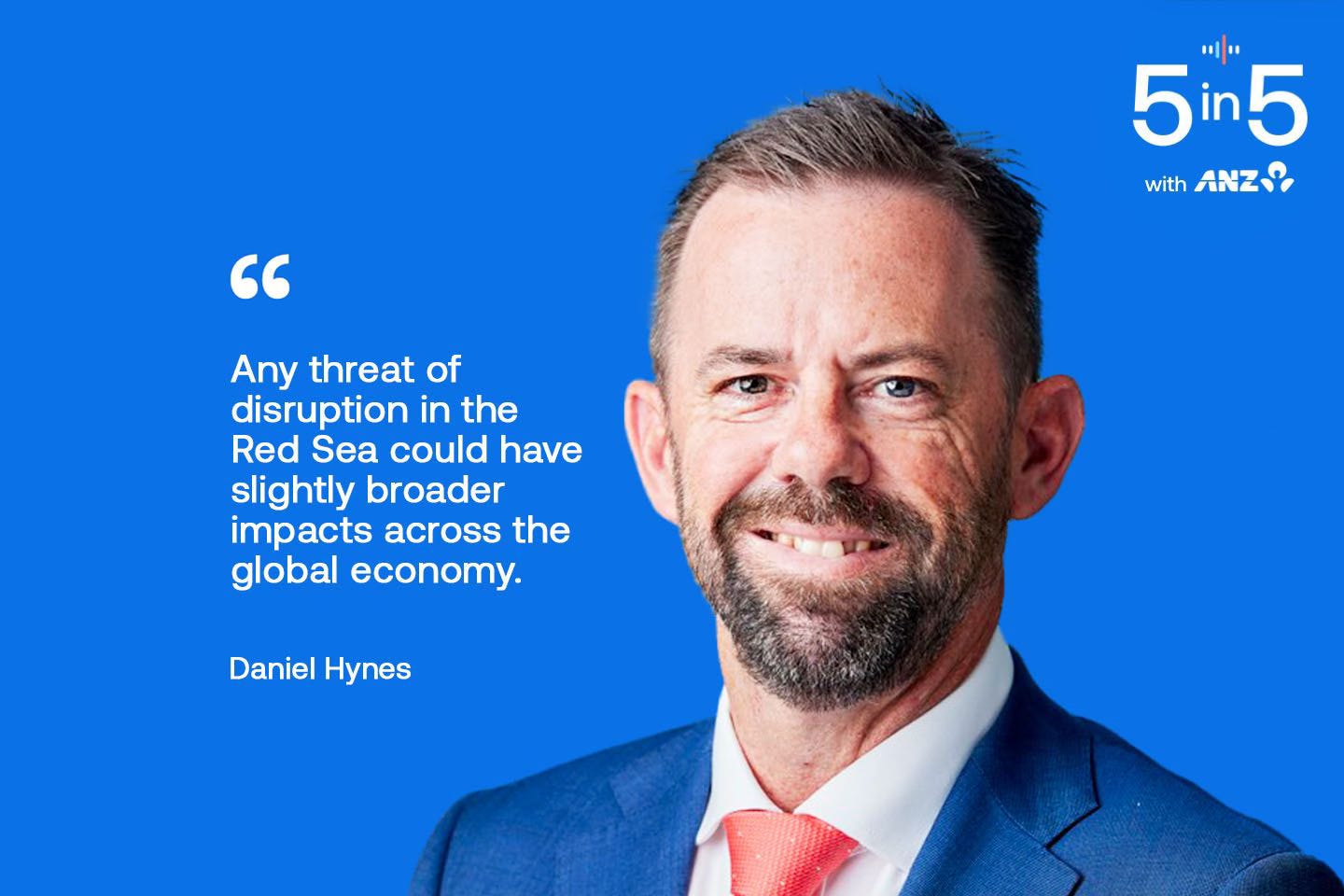
And then in our deep-dive interview, ANZ Senior Commodities Strategist Daniel Hynes analyses the further impact on oil and the world economy if Red Sea trade becomes disrupted by the Middle East conflict.
5 things to know in 5 minutes:
US stocks surged and oil prices fell overnight after Donald Trump was reported to want to de-escalate the conflict in Iran, albeit without necessarily reopening the Strait of Hormuz. Trump told his allies in a social media post that they would have to ‘get their own oil’. Meanwhile, in Australia, the RBA’s minutes for its March rate-hike meeting showed the four board members that voted against a hike still agreed with the other five that rates needed to go up. It was just a question of March or May, says ANZ Head of Australian Economics Adam Boyton.
The RBA’s decision to hike rates was one contributor, along with the Middle East conflict, to ANZ Roy Morgan Australian consumer confidence hitting another record low last week, says ANZ Economist Sophia Angala. The headline series began in 1973. Also, inflation expectations rose further.
Australian monthly private sector credit growth ticked up to 0.6% in February from 0.5% in January as business and personal credit growth rose. Housing credit was more steady. ANZ Economist Maddy Dunk says there are signs investor housing credit growth is softening.
In New Zealand, business confidence slumped at the end of March, according to ANZ’s Business Outlook survey. ANZ Chief Economist Sharon Zollner said the headline index of +33 was buoyed by early responses. Responses at the end of the month averaged negative 23.
China’s economy looks set to meet official growth targets this quarter without the support of rate cuts, after PMIs for March were stronger than expected. ANZ Senior China Strategist Zhaopeng Xing says prices rose and exports surged.
Cheers
Bernard.
PS: Catch you tomorrow with another look at the health of Australia’s housing market, with building approvals data due.


