


Oil prices are up in the absence of face-to-face peace talks between the United States and Iran, and the ongoing closure of the Strait of Hormuz. The focus turns today to the Bank of Japan (BoJ), where a rate hold is expected.
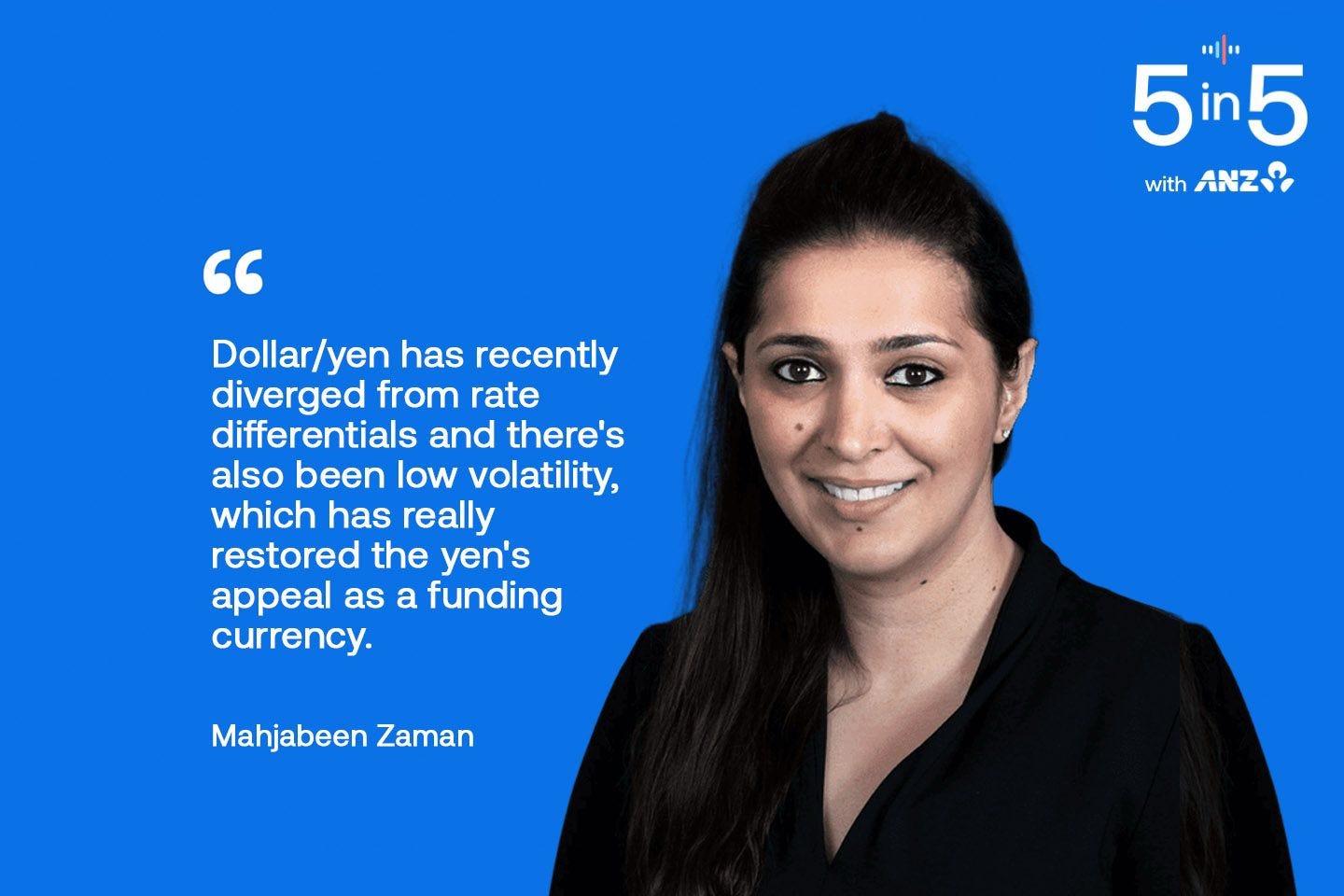
In our deep-dive interview, ANZ Head of FX Research Mahjabeen Zaman looks at why the yen has regained its strength somewhat in recent weeks, and what might happen if there’s a surprise hike by the BoJ later today.
5 things to know in 5 minutes:
The Bank of Japan is expected to hold its key interest rate at 0.75% later today. ANZ Head of FX Research Mahjabeen Zaman previews the decision and expects the next hike to be in June.
China’s authorities are delaying approvals for firms borrowing offshore, which is forcing them to hunt around for cash ahead of the maturing of US$100 billion of bonds this year, Bloomberg reports. ANZ’s Chief Economist for Greater China, Raymond Yeung, says China is trying to reveal the debt exposure of Chinese companies borrowing overseas.
Raymond says China will need to coordinate its exchange rate and interest rate policies, given interest rates in China are low and offshore borrowing costs in US dollars are much higher.
Gold prices have fallen nearly 15% since the beginning of the conflict in Iran. ANZ Commodity Strategist Soni Kumari says it’s all about inflation and interest rate expectations going higher with the oil price, making gold less attractive in the short term. She is more confident about the medium to longer term.
ANZ Economist Bansi Madhavani says the US Conference Board measure of consumer confidence for April is expected to be downbeat in data out tonight, in line with last week’s University of Michigan measure showing a slump to record lows.
Cheers,
Bernard.
PS: Catch you tomorrow with a preview of Australian inflation figures for the first quarter due later in the day.


