


Oil prices are up again and global stocks start the week on the back foot after a selloff on global bond markets on Friday night, as investors worry about the longer term effects of the Iran conflict and political uncertainty on growth and inflation.
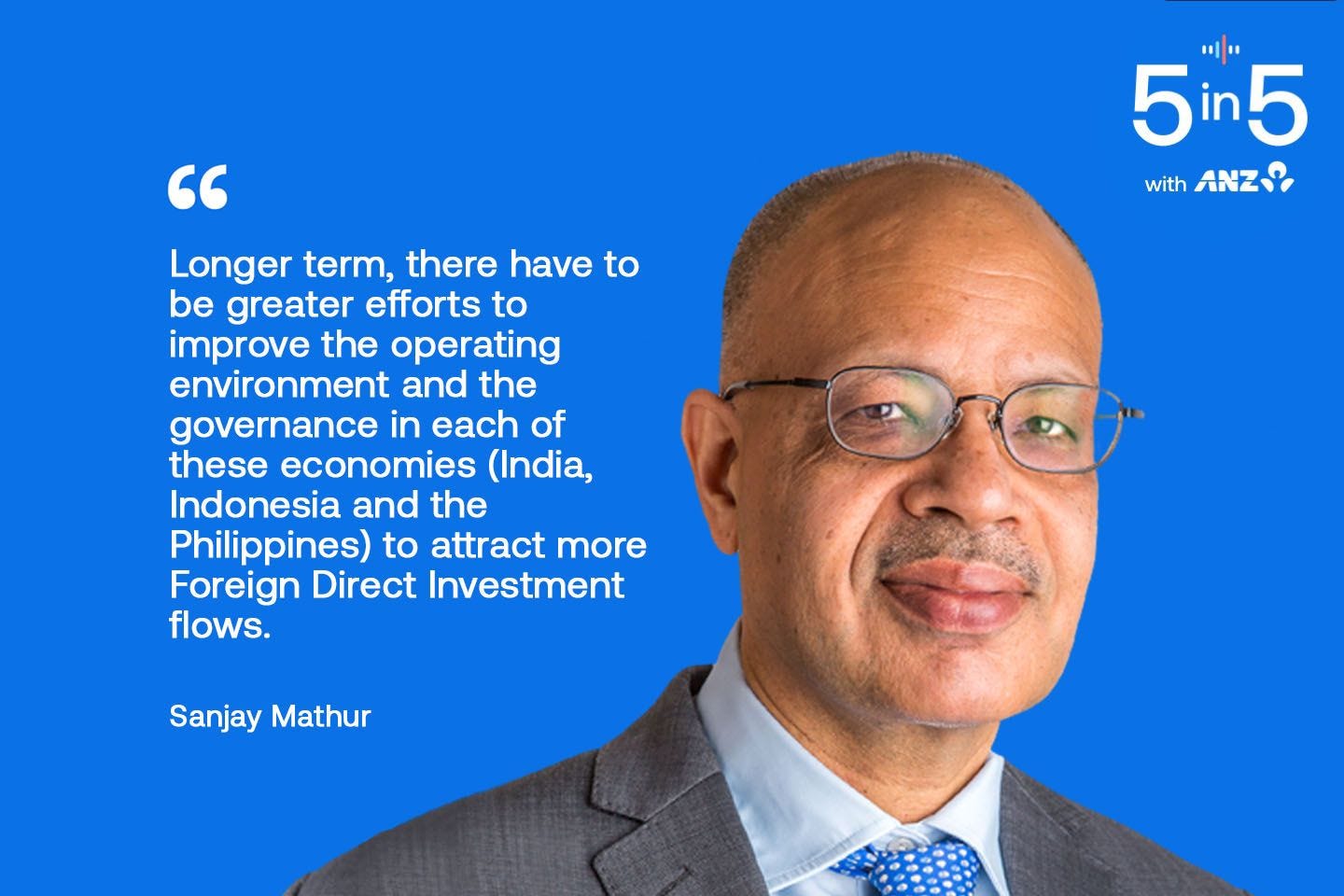
In our deep-dive interview, ANZ’s Chief Economist for Southeast Asia and India, Sanjay Mathur, analyses the worsening of balance of payments deficits in the Philippines, India and Indonesia.
5 things to know in 5 minutes:
Oil prices jumped again on Friday night, as did global bond yields, as investors worried about the long term effects on inflation and growth from an increasingly long conflict blocking the Strait of Hormuz. ANZ Head of G3 Economics Brian Martin points to last week’s auction of 30-Year US Treasury bonds at a yield over 5% for the first time in 19 years as an important milestone.
China’s new yuan loans fell by a surprising 10 billion yuan to 8.59 trillion in April from March, which ANZ’s Senior China Strategist Zhaopeng Xing says was rare, but he adds there are reasons not to be pessimistic.
Fresh data due from China today on industrial production, retail sales and fixed asset investment is likely to continue to show a two-speed economy, with plenty of production, but not so much consumer demand, says ANZ Economist Vicky Xiao Zhou.
New Zealand pricing indicators data for April showed slightly slower than expected inflation in the month. ANZ New Zealand Senior China Economist Miles Workman saw the data as a mixed bag.
New Zealand’s Purchasing Manager Index (PMI) for the manufacturing sector showed another slide in April to just above the 50 threshold representing expansion, says ANZ Senior Economist Matt Galt.
Cheers,
Bernard.
PS: Catch you with a closer look at the Federal Reserve, soon to be under new management with the confirmation last week of Kevin Warsh as new Fed Chair.


