


Oil falls and stocks rise again as a deal to re-open the Strait of Hormuz is signed. The Bank of England holds. Central banks in Indonesia and the Philippines hike. And New Zealand’s economy grows solidly in the March quarter.
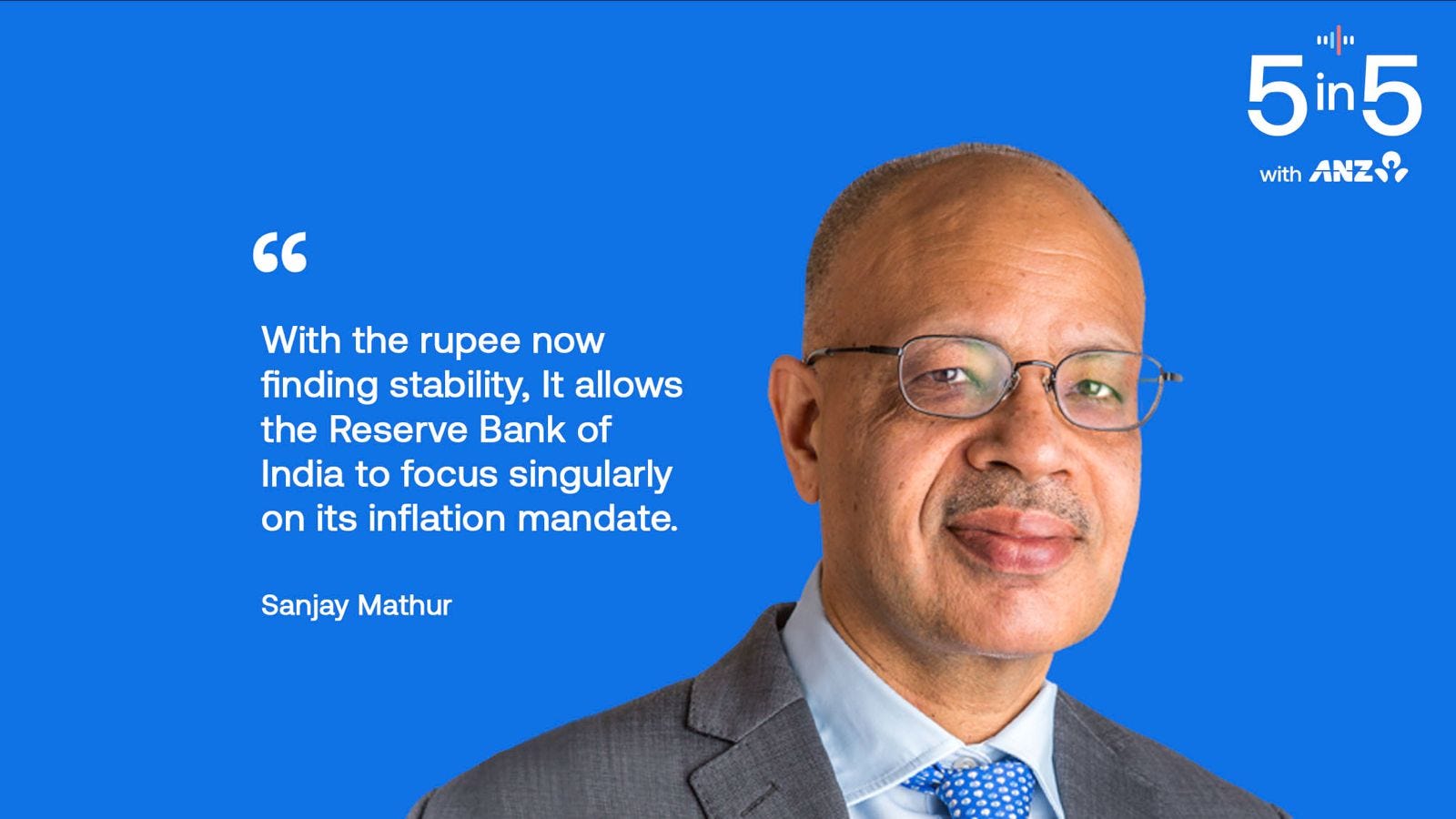
In our deep-dive interview, ANZ Chief Economist for Southeast Asia and India Sanjay Mathur analyses India’s attempts to address a worsening balance of payments position and what they mean for the central bank.
5 things to know in 5 minutes:
The Bank of England held interest rates overnight, as expected, says ANZ Economist Henry Russell from London this morning.
New Zealand’s economy grew 0.8% in the March quarter, up from 0.5% in December and in line with market expectations. ANZ Senior Economist Matt Galt says upward revisions to previous quarters meant annual growth was stronger than expected at 1.5%.
Matthew says the effects of the Middle East conflict won’t have affected the data, which should show through in the current June quarter.
Bank Indonesia raised its benchmark rate another 25 basis points to 5.75% yesterday. ANZ Economist Krystal Tan expects a further hike to at least 6% to maintain attractive returns for foreign investors, particularly after yesterday’s shift in Fed guidance to indicating US rate hikes are possible.
The Philippines’ central bank also hiked 25 basis points to 4.75% and signalled further tightening. ANZ FX Analyst Kausani Basak says the BSP expects inflation pressure to remain above target until 2027.
Cheers,
Bernard.
PS: Catch you next week with Australia’s May monthly inflation and unemployment readings.


