


US inflation is cooler than expected. The New Zealand Government’s borrowing position is set to improve following yesterday’s budget. And in Australia, data centre investment jumps, while household spending starts to ease.
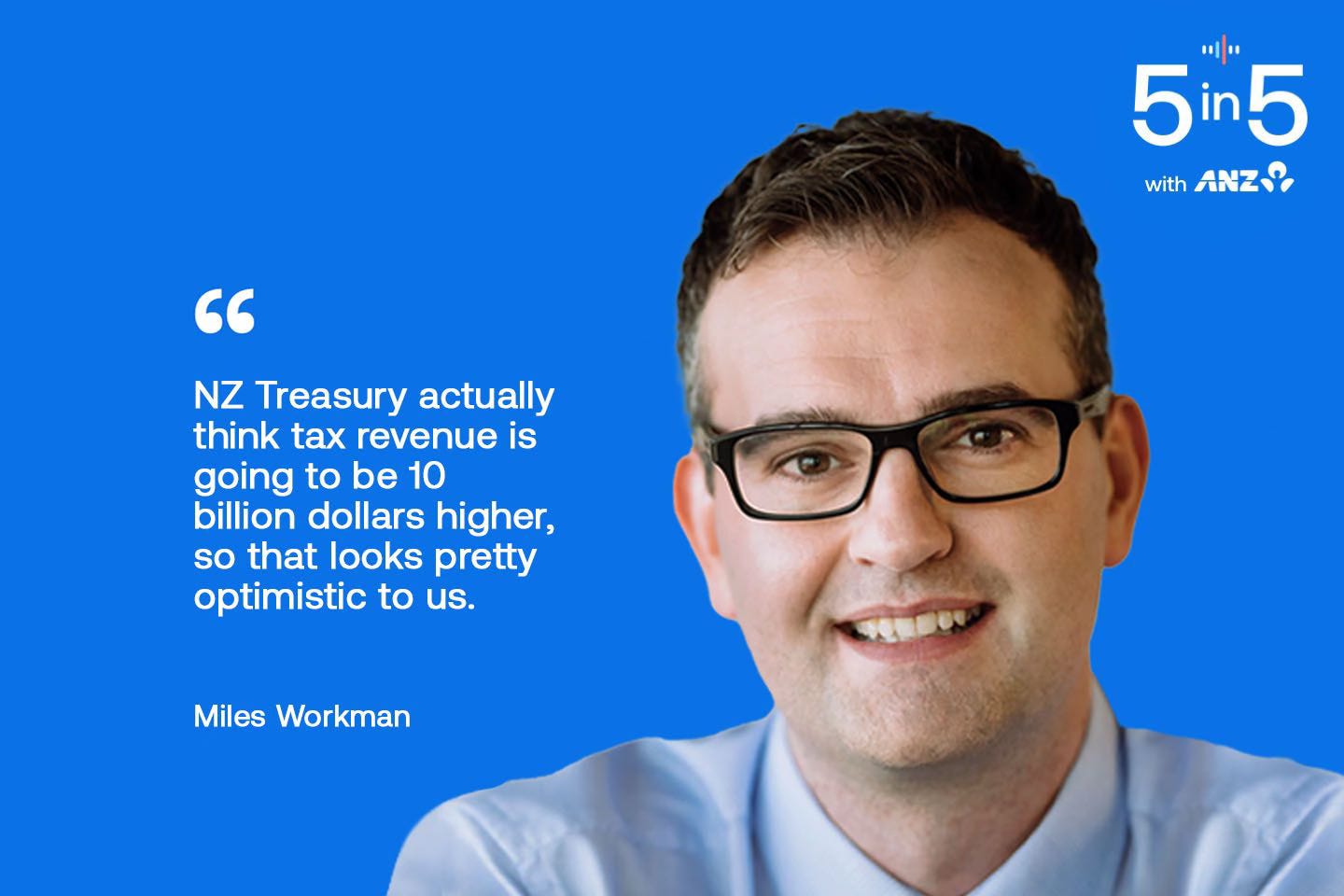
In our deep-dive interview, ANZ Senior Economist Miles Workman dissects the New Zealand Government budget delivered yesterday, buoyed by a new set of Treasury forecasts.
5 things to know in 5 minutes:
US inflation figures for April were slower than expected overnight, with core inflation for the month of 0.2% being one tenth lower than market expectations, says ANZ’s Head of G3 Economics Brian Martin.
New Zealand’s Finance Minister, Nicola Willis, delivered a budget yesterday that brought forward the budget surplus track and forecast net debt peaking lower than was expected back in December. ANZ Senior Economist Miles Workman says there was a big jump in the forecast tax take.
Australian household spending fell 1.1% in April after rising 1.6% in March. ANZ Head of Australian Economics Adam Boyton says the moves reflected oil prices in each month. But he says there was also a more general softening in demand.
Australian capex rose 6.5% in the March quarter, well ahead of market expectations for 1%. Adam says it was boosted by investment in IT, media and telecoms equipment - linked to data centres - soaring 196% in the quarter, and 431% annually. But it might not feed through to GDP growth.
The Bank of Korea held its benchmark rate at 2.5% yesterday, but indicated rate hikes are coming as inflation and growth forecasts were lifted. ANZ Economist Krystal Tan says hikes to 3% are on the cards through 2026, with more possible in 2027 if the semiconductor boom continues.
Cheers,
Bernard.
PS: Catch you next week with a look at the rise of Australian Kangaroo bond issuance from offshore borrowers.


